You’ve mapped out your professional trajectory. You know exactly where you want to be in five years, leading a department, making partner, or launching a startup. But there is one variable that doesn’t respond to late-night hustle or quarterly planning: your biological clock.
For driven professionals, the pressure to choose between career momentum and future motherhood is intense. You delay starting a family to build financial stability, only to realize that wealth cannot rewind your ovarian reserve. The frustration is real. You shouldn’t have to sacrifice your ambitions just because human biology hasn’t caught up with modern society.
The solution isn’t compromising your goals; it’s buying time. But before you step into a clinic, you need absolute clarity on the oocyte freezing cost. I’ve sat across from hundreds of women who were sold a low “package price” by other centers, only to be blindsided later by the exorbitant price of stimulation drugs or thawing protocols. Let’s strip away the marketing jargon. Here is a granular, expert breakdown of what strategic fertility preservation actually demands of your body and your bank account.
Oocyte Freezing Cost: Balancing the Biological Clock and the Corporate Ladder
Fertility preservation is not just a medical procedure. It is a strategic hedge against future regret.
Women are born with a finite number of eggs. By age 30, your ovarian reserve is already declining. By 35, both the quantity and the chromosomal quality of those eggs drop sharply. Meanwhile, your mid-thirties are often the exact years your career demands the highest output.
When you proactively freeze your eggs (cryopreservation), you lock in the biological age of those cells. An egg frozen at 29 and fertilized at 39 behaves like a 29-year-old egg. This drastically reduces the risks of miscarriage, chromosomal abnormalities, and recurrent implantation failure later in life.
The “True Cost” Calculator: Breaking Down the Oocyte Freezing Cost
If you are researching clinics in Bangalore, you will likely see base quotes ranging from ₹1,30,000 to ₹1,50,000 per cycle. This number is dangerously misleading. It represents the procedural baseline, not the aggregate financial commitment.
To calculate your true oocyte freezing cost, you must account for the entire clinical lifecycle.
1. Initial Assessment and Diagnostics (₹10,000 – ₹15,000)
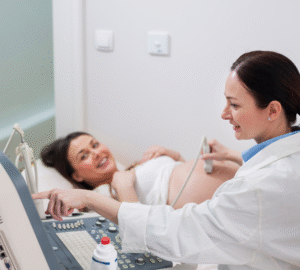
Before any stimulation begins, we must evaluate your baseline fertility. This involves an Anti-Müllerian Hormone (AMH) blood test to check your ovarian reserve and a transvaginal ultrasound to count antral follicles.
2. The Silent Variable: Hormonal Medications (₹50,000 – ₹1,20,000)
This is where budget shock hits hardest. To retrieve multiple eggs, you must self-administer gonadotropin injections for 10 to 12 days. The required dosage depends entirely on your age and AMH levels. A 38-year-old woman with a low reserve will require significantly higher doses of expensive stimulation drugs compared to a 28-year-old. Always ask if medications are included in your quoted package.
3. Egg Retrieval and Vitrification (₹80,000 – ₹1,20,000)
This covers the core procedure. Under mild sedation, an experienced gynecologist retrieves the fluid from your follicles. The embryology lab then immediately evaluates the mature eggs and flash-freezes them using a state-of-the-art technique called vitrification. Vitrification prevents ice crystals from forming, ensuring survival rates of over 85% upon thawing.
4. Annual Cryostorage Fees (₹20,000 – ₹30,000/year)
Your eggs reside in liquid nitrogen tanks. Most clinics waive the first year of storage, but you must factor in the recurring annual fee for as long as you plan to keep them frozen.
5. The Future Cost: Thawing, ICSI, and Embryo Transfer (₹1,50,000 – ₹2,50,000)
Freezing your eggs is only step one. When you are ready to conceive, you will incur the costs of thawing the oocytes, fertilizing them via Intracytoplasmic Sperm Injection (ICSI), culturing the embryos, and performing the final transfer into your uterus.
Why Waiting Destroys Your Financial and Biological ROI
One of the most common strategic errors I see is waiting until age 36 to “think about it.”
Age dictates how many eggs you produce per cycle. To achieve a 75% chance of one live birth, a 30-year-old might need 15 eggs. A 38-year-old might need 30 eggs due to higher rates of chromosomal abnormalities.
If you wait, you will likely require multiple retrieval cycles to bank enough viable eggs. The initial oocyte freezing cost triples, while your statistical chance of success plummets.
The ROI of Freezing: Age 29 vs. Age 37
| Metric | Freezing at Age 29 | Freezing at Age 37 |
| Average Eggs Needed for 1 Live Birth | 12 – 15 | 25 – 30 |
| Expected Yield Per Cycle | 15+ eggs | 6 – 8 eggs |
| Cycles Required | 1 Cycle | 3 – 4 Cycles |
| Estimated Total Upfront Cost (Meds Included) | ₹1,60,000 | ₹4,80,000+ |
| Biological ROI | High (Excellent egg quality) | Low (Diminished egg quality) |
Data reflects general clinical averages. Individual results depend strictly on baseline AMH and response to stimulation.
The Karthika Woman and Child Care Advantage
At Karthika Woman and Child Care in Bengaluru, we reject the bait-and-switch pricing model. Transparency is a clinical mandate.
When you consult with our reproductive specialists, we analyze your AMH, map out your career timeline, and provide a single, itemized breakdown. From advanced vitrification in our top-tier embryology lab to comprehensive maternity care when you eventually return to use those eggs, we offer an unbroken continuum of care. We also offer flexible financing and EMI options to make fertility preservation accessible without draining your investment portfolios.
Take control of your timeline. Protect your options.
Frequently Asked Questions
Is the oocyte freezing cost covered by health insurance in India?
Generally, no. Standard corporate or private health insurance plans in India consider elective fertility preservation a cosmetic or non-essential procedure. However, if you are freezing eggs due to a medical necessity, such as impending chemotherapy or severe endometriosis, certain specific policies may offer partial coverage.
Does freezing my eggs guarantee a future pregnancy?
No medical procedure offers a 100% guarantee. Egg freezing provides a biological insurance policy, but success depends heavily on your age at the time of freezing, the number of mature eggs retrieved, and the quality of the sperm used for fertilization later.
How long can my eggs remain safely frozen?
Indefinitely. Because they are stored in liquid nitrogen at -196°C using the vitrification process, cellular metabolism halts completely. Eggs stored for a decade have the exact same viability as eggs stored for a month.
Will egg retrieval deplete my natural ovarian reserve faster?
No. Every month, your body naturally recruits a cohort of follicles, but only one matures to ovulation; the rest die off. The stimulation medications simply “rescue” those other follicles from dying, allowing us to retrieve them. We are not touching the eggs meant for your future cycles.