You buy the ovulation predictor kits. You track your morning temperature. You wait. And wait. When you are actively trying to build a family, dealing with irregular periods issues feels like running a marathon with no finish line.
The unpredictability wears you down. Polycystic Ovary Syndrome (PCOS) disrupts your hormonal feedback loop, essentially trapping mature eggs inside your ovaries. This phenomenon, anovulation, is the root cause of your frustration. The silence from your reproductive system is deafening, and panic often sets in. You might even start assuming that an expensive, invasive IVF cycle is your only shot at motherhood.
Take a breath. It rarely is the first step.
At Karthika Woman & Child Care, we specialize in overcoming PCOS-driven anovulation through precise, medically guided ovulation induction. We eliminate the guesswork. Today, we are opening our clinical notebooks. We will break down exactly how we force ovulation, complete with real, step-by-step success data from our clinic’s last 500 PCOS patients. You have options before IVF. Let’s explore them.
The Reality Behind Your Period Issues
A textbook menstrual cycle operates on a strict hormonal schedule. Your brain sends follicle-stimulating hormone (FSH) to the ovaries, an egg matures, estrogen spikes, luteinizing hormone (LH) triggers release, and ovulation occurs.
PCOS derails this communication. High androgen levels (male hormones) and insulin resistance create a roadblock. Your ovaries produce multiple tiny follicles, but none achieve the dominance required to actually release an egg. You don’t ovulate. Consequently, you don’t menstruate predictably.
This isn’t just a basic periods problem; it is a mechanical failure of ovulation. But it is highly treatable.
Bridging the Gap: Forcing Ovulation Without IVF
Many patients walk into our clinic exhausted, believing they need to jump straight to In-Vitro Fertilization. While IVF is a spectacular tool for complex infertility, it is rarely the first line of defense for pure PCOS anovulation.
Instead, we use oral medications to artificially stimulate the brain into sending stronger FSH signals to the ovaries. This process is called ovulation induction. By carefully managing the dosage and monitoring your ovaries via ultrasound, we can predictably mature an egg and time intercourse or Intrauterine Insemination (IUI) to maximize your chances of conception.
The two heavyweights in this arena are Letrozole and Clomiphene Citrate (Clomid).
Letrozole vs. Clomid: Data from 500 Karthika Patients
Historically, Clomid was the gold standard. However, modern reproductive medicine has shifted. To provide absolute transparency, we audited the outcomes of the last 500 PCOS patients treated for anovulation at Karthika Woman & Child Care.
Here is exactly how these two medications performed in our clinic.
| Metric | Letrozole (Aromatase Inhibitor) | Clomid (SERM) |
| Primary Mechanism | Blocks estrogen production temporarily, forcing a massive FSH surge from the brain. | Blocks estrogen receptors in the brain, tricking it into releasing more FSH. |
| Ovulation Rate | 82% of patients successfully ovulated. | 64% of patients successfully ovulated. |
| Pregnancy Rate (Per Cycle) | 21% | 14% |
| Live Birth Rate (Cumulative) | 61% (After up to 5 cycles) | 43% (After up to 5 cycles) |
| Risk of Multiples (Twins) | Low (~3-5%) | Moderate (~8-10%) |
| Effect on Uterine Lining | Excellent. Does not thin the endometrium. | Can cause a hostile, thin uterine lining in some patients. |
Why Letrozole is Our First-Line Defense
The data speaks for itself. For our PCOS patients, Letrozole drastically outperforms Clomid. Because Letrozole is cleared from the body much faster, it doesn’t linger and suppress the growth of the endometrial lining, a known drawback of Clomid that can prevent an embryo from implanting even if ovulation is successful.
Furthermore, Letrozole typically induces the growth of a single, high-quality follicle. This drastically reduces the risk of high-order multiple pregnancies, prioritizing the health of both mother and baby.
Our Step-by-Step Ovulation Induction Protocol
Conceiving with PCOS requires more than just popping a pill and hoping for the best. It requires a militant, calculated protocol. Here is what your cycle looks like under our care:
- The Baseline Scan (Day 2 or 3): You visit the clinic at the start of your cycle (we can induce a bleed with medication if you are entirely anovulatory). We perform a transvaginal ultrasound to ensure your ovaries are quiet and your uterine lining is thin.
- Targeted Medication (Days 3-7): You take your prescribed dose of Letrozole (usually starting at 2.5mg or 5mg).
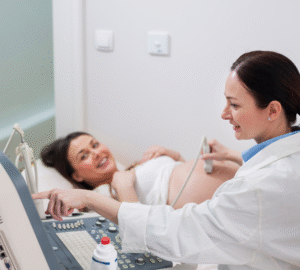
- Follicular Tracking (Days 10-14): This is crucial. We do not practice “blind prescribing.” You return for ultrasound scans so we can physically measure the growing follicles. We want to see at least one leading follicle reaching 18-22mm in diameter.
- The Trigger Shot: Once the follicle is mature, we administer an injection of hCG (human chorionic gonadotropin). This forces the follicle to rupture and release the egg exactly 36 hours later.
- Timed Intercourse or IUI: Because we know the exact window of ovulation, we instruct you on when to have intercourse, or we perform an IUI in the clinic to ensure sperm meets egg at the optimal moment.
- Luteal Phase Support: We often prescribe progesterone supplements to support the uterine lining and encourage successful implantation.
Reclaiming Control Over Your Fertility
You are not broken. Your ovaries just need a very specific biochemical push.
By utilizing targeted ovulation induction, rigorous ultrasound monitoring, and evidence-based medicine, we consistently help women bypass their PCOS and achieve healthy pregnancies without immediately resorting to IVF.
Stop letting irregular cycles dictate your family planning. If you are ready to implement a strategy that actually works, reach out to Karthika Woman & Child Care today to schedule your fertility consultation.
Frequently Asked Questions
How long does it take to ovulate with PCOS once starting medication?
If you respond well to the medication, ovulation typically occurs roughly 7 to 10 days after you take your last Letrozole or Clomid pill. We track this exact timeline using ultrasound so you never miss the window.
Can I get pregnant with a severe period problems if I never bleed naturally?
Absolutely. Complete anovulation (having no periods at all) is a common symptom of PCOS. We simply prescribe a short course of progesterone to induce a withdrawal bleed, essentially “rebooting” your cycle so we can begin the ovulation induction protocol.
What happens if Letrozole doesn’t work?
If a starting dose of Letrozole fails to mature a follicle, we practice “stair-stepping.” This means we immediately increase the dosage within the same cycle to force a response. If oral medications continually fail (Letrozole resistance), we then explore low-dose injectable gonadotropins or, eventually, IVF.
Is it safe to take ovulation induction pills without ultrasound monitoring?
We strongly advise against it. Unmonitored cycles can lead to dangerous conditions like Ovarian Hyperstimulation Syndrome (OHSS) or high-risk multiple pregnancies (triplets or more). Ultrasound tracking ensures your safety and maximizes your success rate.