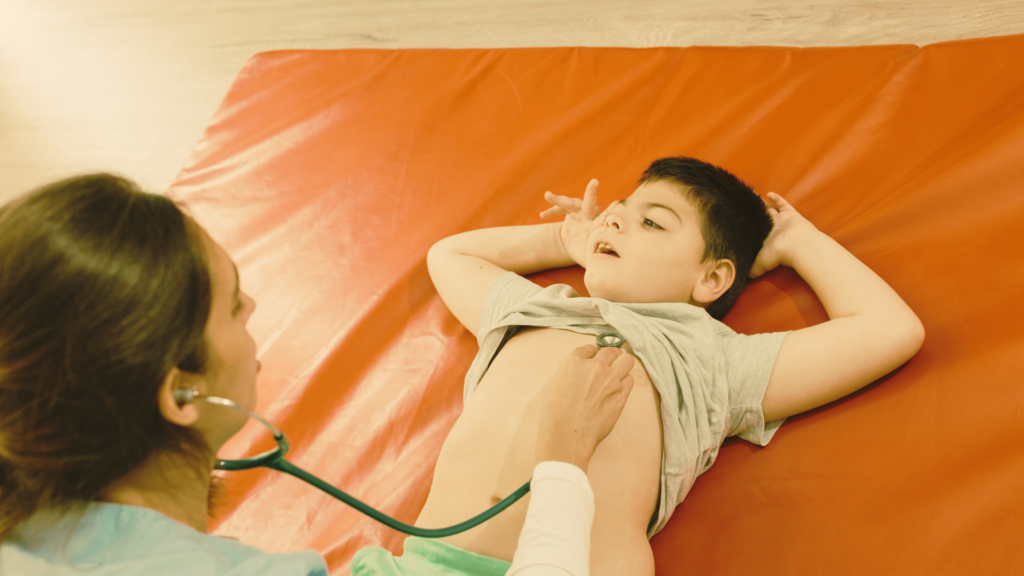
You relocated to North Bengaluru for the career advantages of the IT corridor, but the environmental toll is showing up where it hurts most: your child’s health. What started as a mild seasonal sniffle has evolved into a persistent, dry nighttime cough. The constant drone of Outer Ring Road traffic, idling diesel cabs, and endless commercial construction dust around Nagavara are directly infiltrating their fragile airways.
When a toddler’s chest tightens and you hear that distinct, high-pitched whistle with every exhale, panic sets in. You do not have the luxury of trial-and-error pediatric advice when your child is actively struggling for breath. Securing a highly specialized pediatric pulmonologist near Manyata Tech Park is no longer just about geographic convenience, it is a medical imperative to intercept chronic airway inflammation before it permanently damages their lung function.
At Karthika Woman and Child Care, our pediatric respiratory protocols are built for the reality of urban Bengaluru. We do not just prescribe standard inhalers; we map the environmental triggers specific to North Bengaluru and equip you with robust, home-based management strategies.
How North Bengaluru’s AQI Directly Triggers Pediatric Airways
Children are not miniature adults. Their respiratory rates are significantly faster, meaning they inhale a proportionally larger volume of air, and airborne toxins, per kilogram of body weight. The particulate matter (PM2.5) generated by daily traffic gridlock and localized construction easily bypasses the natural filtration mechanisms of a child’s nose and throat, lodging deep within the alveolar spaces.
This persistent exposure induces micro-inflammation in the airway lining, creating a state of hyperresponsiveness. To manage this effectively, you need a targeted strategy tailored to our local seasonal shifts.
The Nagavara Seasonal Asthma Matrix
Air quality in North Bengaluru fluctuates drastically based on weather patterns. Understanding these shifts helps you preemptively adjust your child’s controller medications.
- Winter Smog (November – January): Temperature inversions trap cold air and vehicular exhaust close to the ground. PM2.5 levels routinely spike during early morning school commutes. Action: Shift outdoor sports to mid-day and ensure daily inhaled corticosteroids (ICS) are strictly administered.
- Summer Dust (March – May): Dry conditions elevate windblown particulate matter from the extensive construction zones bordering the Manyata campus. Action: Utilize high-efficiency particulate air (HEPA) purifiers in the child’s bedroom and keep windows closed during high-wind afternoons.
- Monsoon Mold (June – September): While rain washes away street dust, the resultant high humidity (often exceeding 80%) creates an ideal breeding ground for indoor mold spores and dust mites, both potent asthma triggers. Action: Run a dehumidifier to maintain indoor humidity between 40-50%.
Clinical Insight: A persistent cough that worsens exclusively at night or during intense physical activity is often the first clinical indicator of pediatric asthma, even in the complete absence of audible wheezing.
Infant Wheezing vs. True Asthma: The Diagnostic Distinction
Not all wheezing equates to chronic asthma. Viral-induced wheezing is exceptionally common in children under three, often triggered by a standard respiratory syncytial virus (RSV) or rhinovirus infection.
However, searching for effective infant wheezing treatment Nagavara parents can trust requires distinguishing between a temporary viral reaction and early-onset asthma. Our specialists look for the “Asthma Predictive Index,” factoring in:
- A parental history of asthma or severe allergies.
- The child presenting with atopic dermatitis (eczema).
- Eosinophilia detected in routine blood panels.
If these markers align, we transition the child from temporary symptom relief to a long-term preventive lung protection protocol.
Safe Home Nebulization Guidelines for Parents
During an acute flare-up, a home nebulizer or an inhaler paired with a valved holding chamber (spacer) is your first line of defense. However, administering bronchodilators without clinical parameters can be dangerous.
Every parent should know the boundary between home care and a medical emergency.
| Clinical Presentation | Recommended Parent Action | When to Seek the ER |
| Mild Cough & Runny Nose | Continue standard preventative inhaler (ICS). Monitor peak flow. | Fever exceeds 102°F or the child refuses to drink fluids. |
| Audible Wheeze but Active | Administer prescribed rescue medication (e.g., Albuterol) via spacer. Observe for 20 minutes. | Wheezing worsens or fails to improve 20 minutes post-treatment. |
| Rapid Breathing at Rest | Administer rescue medication immediately. Contact your child asthma doctor. | You observe “retractions” (skin pulling in tightly around the ribs or neck with each breath). |
| Difficulty Speaking | Do not wait. This is severe airway constriction. | Immediate emergency intervention required. Look for bluish lips or lethargy. |
Never self-prescribe oral steroids (like prednisolone) for an exacerbation without explicit, real-time guidance from your pulmonologist.
Frequently Asked Questions
Can an air purifier alone prevent my child’s asthma attacks?
No. While a True HEPA H13/H14 purifier is an excellent tool for reducing indoor PM2.5 and allergen loads, it cannot reverse existing airway inflammation. It must be utilized in tandem with your child’s prescribed controller inhaler therapy.
Why does my child need a spacer with their inhaler?
Pressurized metered-dose inhalers expel medication at nearly 60 miles per hour. Without a spacer, the medication simply hits the back of the child’s throat and is swallowed into the stomach. A spacer holds the aerosolized medication in a chamber, allowing the child to inhale it slowly and directly into the deep lung tissues where it is actually needed.
Is it safe for my child to play sports outdoors near Manyata Tech Park?
Physical activity is crucial for pediatric lung development. However, timing is everything. Avoid outdoor strenuous sports during early mornings and late evenings when smog and traffic exhaust are trapped near the ground level. Opt for indoor sports facilities on days when the AQI exceeds 150.