You are curled up with a heating pad, calculating if you can afford to call in sick—again. A severe problem during menstruation is not a mere inconvenience. It derails your career, interrupts your education, and forces you to silently endure while your boss or colleagues notice your monthly absences.
For years, you have likely been told that a female menses problem is just part of the biological deal. You rely on over-the-counter painkillers, watching the clock until you can take the next dose, hoping the medication kicks in before the cramps trigger nausea.
Imagine a menstrual cycle where you do not lose three days to crippling pelvic pain. By understanding the exact biochemical triggers causing your uterus to contract with the force of early labor, you open the door to targeted, root-cause clinical therapies.
Stop normalizing agonizing period issues. We need to look at treating dysmenorrhea beyond painkillers. This guide breaks down how specific medications interact with your body’s pain receptors and outlines exactly when you need advanced gynecological intervention at Karthika Woman and Child Care.
The Science of the Cramp: Why Does Your Uterus Hurt?
Primary dysmenorrhea is not in your head. It is a documented chemical reaction. Before menstruation begins, your endometrial lining builds up elevated levels of hormone-like lipids called prostaglandins. Specifically, Prostaglandin F2-alpha (PGF2α) triggers the smooth muscle of your myometrium (the uterine wall) to contract and shed its lining.
When prostaglandin levels are abnormally high, the uterine contractions become so severe that they compress nearby blood vessels. This cuts off oxygen to the muscle tissue, resulting in sharp, radiating pelvic pain.
Mapping Prostaglandin Inhibitors and Pain Relief Timelines
When you swallow a standard Nonsteroidal Anti-Inflammatory Drug (NSAID), you engage in a race against your own biochemistry. NSAIDs work by inhibiting cyclooxygenase (COX) enzymes, which are responsible for synthesizing new prostaglandins. However, not all painkillers operate on the same timeline or with the same mechanism.
If you are treating dysmenorrhea beyond painkillers from the grocery store aisle, understanding these pharmacological nuances is your first step toward actual relief.
| Medication Class | Example | Mechanism of Action | Relief Timeline & Efficacy | Clinical Application |
| Phenyl Propionic Acid | Ibuprofen | Blocks COX-1 and COX-2 enzymes to halt new prostaglandin production. | Onset: 30–60 mins. Duration: 4–6 hrs. | Best taken 24 hours before menses begins. Ineffective against prostaglandins already bound to receptors. |
| Fenamate Derivative | Mefenamic Acid | Halts new synthesis and physically blocks existing prostaglandins from binding to cellular receptors. | Onset: 2–4 hrs. Duration: 6 hrs. | Highly effective for established pain. Often prescribed by gynecologists when standard ibuprofen fails. |
| Acetic Acid Derivative | Diclofenac | Aggressive COX enzyme inhibition. | Onset: 30 mins. Duration: 6–8 hrs. | Provides the highest objective symptom reduction, but carries a larger gastrointestinal side effect profile. |
Clinical Insight: Timing is everything. If you wait until you are already in agony to take ibuprofen, your uterus is already flooded with prostaglandins. The medication cannot undo what is already in your system; it only stops the next wave.
When NSAIDs Fail: Secondary Dysmenorrhea
If targeted NSAID therapy does not restore your ability to function at work, you are likely dealing with secondary dysmenorrhea. This means the pain is a symptom of an underlying structural pelvic pathology, rather than just a routine chemical fluctuation.
Adenomyosis and Endometriosis
At Karthika Woman and Child Care, we frequently see patients who have suffered for a decade before receiving a proper diagnosis. Two of the most common culprits include:
- Adenomyosis: The endometrial tissue grows aggressively into the muscular wall of the uterus. This creates a bulky, inflamed uterus, leading to prolonged, heavy bleeding and a distinct “bearing down” sensation that over-the-counter medication cannot touch.
- Endometriosis: Tissue resembling the uterine lining implants itself outside the uterus—often on the ovaries, fallopian tubes, or pelvic sidewalls. These lesions bleed internally during your cycle, causing severe inflammation and scar tissue formation.
Clinical Interventions: Dysmenorrhea Beyond Painkillers
When a problem during menstruation threatens your livelihood and mental health, clinical intervention is non-negotiable. Modern gynecology offers highly effective, targeted treatments to suppress the pain cycle entirely.
1. Hormonal Suppression Therapies
We can medically downregulate the hormonal fluctuations that trigger prostaglandin release.
- Progestin-Only Intrauterine Devices (IUDs): Devices like Mirena release a localized dose of levonorgestrel directly into the uterine cavity. This aggressively thins the endometrial lining, leaving little tissue to produce prostaglandins. Many patients experience a total cessation of periods (amenorrhea) within six months.
- Oral Contraceptives: Combined estrogen-progestin pills suppress ovulation entirely, preventing the mid-cycle hormonal spikes that set the stage for dysmenorrhea.
2. Advanced Diagnostic and Surgical Procedures
If structural abnormalities are present, medication alone will not fix the root issue.
- Hysteroscopy: A minimally invasive procedure where a tiny camera is passed through the cervix to evaluate the uterine cavity. It allows your specialist to identify and simultaneously remove fibroids or polyps contributing to your period issues.
- Laparoscopy: The definitive gold standard for diagnosing and treating endometriosis. Through tiny incisions in the abdomen, specialists can meticulously excise endometrial lesions, immediately reducing systemic pelvic inflammation.
Reclaiming Your Quality of Life
You do not have to accept missed deadlines, canceled plans, and monthly agony as your baseline reality. A severe problem during menstruation requires specialized, compassionate medical investigation.
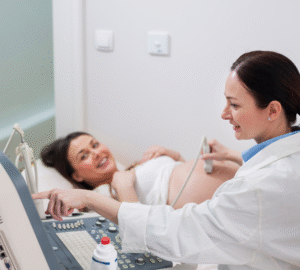
At Karthika Woman and Child Care, our specialists utilize state-of-the-art diagnostics—from advanced ultrasound imaging to minimally invasive hysteroscopy—to map out exactly what is happening inside your pelvis. We move past temporary fixes to build sustainable, long-term treatment plans. Schedule a consultation today and take the first step toward a pain-free cycle.
Frequently Asked Questions (FAQ)
What causes sudden, severe cramps when my periods used to be normal?
A sudden onset of a severe female menses problem in your 20s or 30s is a hallmark of secondary dysmenorrhea. It often indicates the development of adenomyosis, uterine fibroids, or a pelvic infection, requiring immediate clinical evaluation.
Why does ibuprofen stop working for my period cramps?
Ibuprofen only prevents the creation of new pain-causing chemicals (prostaglandins). If your body is overproducing these chemicals due to a condition like endometriosis, standard doses of ibuprofen will not be strong enough to suppress the inflammation.
Are there permanent treatments for severe dysmenorrhea?
Yes. Depending on your diagnosis and family planning goals, long-term solutions range from the insertion of a hormonal IUD to minimally invasive excision surgeries (laparoscopy) or even definitive surgical interventions for severe adenomyosis cases.