You’re staring at the calendar, calculating years, and listening to the loud ticking of your Fertility Check Up Near Me biological clock. Online forums give you contradictory advice. Is 27 too early? Is 36 too late? You want to protect your reproductive future, but the sheer uncertainty of timing it right is paralyzing.
Wait too long, and your egg quality plummets, turning future IVF cycles into steep, expensive uphill battles. Jump the gun in your early twenties, and you might spend thousands on a medical procedure you’ll never actually need. The anxiety of getting it wrong drives many women to frantically search for a fertility check up near me just to get some clarity.
Stop panicking. There is an actual, mathematical sweet spot for oocyte cryopreservation. By mapping the natural decline of your ovarian reserve against your genetic egg quality, we can pinpoint the precise optimal age for egg retrieval. Let’s strip away the emotional overwhelm and look strictly at the clinical data.
Decoding Your Numbers: Why It’s Time for a Fertility Check Up Near Me
To determine the optimal age for egg retrieval, reproductive endocrinologists look at the intersection of two critical biological curves: Oocyte Quantity (measured primarily by Anti-Müllerian Hormone, or AMH, and Antral Follicle Count) and Oocyte Quality (the percentage of eggs that are euploid, meaning chromosomally normal).
If we graph AMH decline against oocyte quality, we find a distinct window where maximum yield meets high genetic integrity.
- The Quantity Curve: AMH levels peak in your mid-twenties and begin a slow decline, dropping precipitously after age 35.
- The Quality Curve: The rate of aneuploidy (chromosomally abnormal eggs) remains relatively low and stable throughout your twenties. Around age 35, the aneuploidy curve spikes sharply upward.
The verdict? The mathematical sweet spot for elective egg retrieval is between the ages of 30 and 34. During this window, you still have a robust ovarian reserve to yield a high number of eggs per cycle and the eggs you retrieve still boast excellent chromosomal normality . Furthermore, women who freeze their eggs in their early 30s are statistically much more likely to actually return and use them compared to women who freeze at 24.
Diagnostic: Are You Too Early or Too Late?
The micro-intent driving most women to research the optimal age for egg retrieval boils down to a diagnostic fear: “Am I too late, or am I doing this too early?”
Here is the unvarnished truth broken down by age bracket.
| Age Bracket | Quantity Yield (AMH/AFC) | Genetic Quality (Euploidy) | Utilization Rate | Strategic Verdict |
| Under 30 | Very High | Excellent | Very Low | Often Too Early. High yield, but statistically, you are highly likely to conceive naturally and never use the frozen eggs. |
| 30 – 34 | High | Very Good | Moderate | The Golden Window. Maximum clinical efficiency. One retrieval cycle usually secures enough eggs for future family building. |
| 35 – 37 | Moderate | Declining | High | Critical Action Phase. Do not wait. Quality and quantity are actively dropping. You may need two retrieval cycles to hit your target number. |
| 38 – 40+ | Low | Poor | Very High | Diminishing Returns. Aneuploidy rates are high. Retrieving enough viable eggs for a successful pregnancy will likely require multiple back-to-back IVF cycles. |
The Role of Underlying Conditions
Age is the heaviest weight on the scale, but it is not the only variable. If you suffer from underlying reproductive conditions, your personal timeline accelerates.
At Karthika Woman and Child Care, we routinely manage complex fertility profiles. Women with PCOS (Polycystic Ovary Syndrome) often have high AMH levels and can yield a massive number of eggs, but those eggs may suffer from lower maturation rates. Conversely, conditions like Endometriosis or Adenomyosis can create a toxic pelvic environment that actively depletes ovarian reserve prematurely. If you have a history of severe menstrual disorders, recurrent pregnancy loss, or require tubal testing, the standard age guidelines do not apply to you. Early intervention is paramount.
Taking Action: Your Reproductive Timeline
Guessing your fertility status based on your age is a flawed strategy. The only way to know exactly where you stand on the AMH and quality curves is to establish your clinical baseline.
If you are 28 or older and family planning is on your horizon, finding a reliable fertility near me is your immediate next step. A comprehensive evaluation requires:
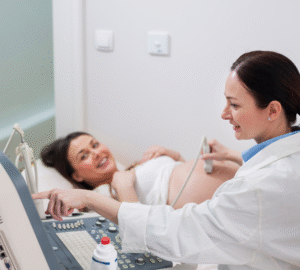
- Transvaginal Ultrasound: To assess your Antral Follicle Count (AFC) and check for cysts, fibroids, or adenomyosis.
- Hormone Blood Panel: Checking AMH, FSH (Follicle Stimulating Hormone), and Estradiol on day 2 or 3 of your menstrual cycle.
- Specialist Consultation: Reviewing your medical history to map out a customized timeline.
Stop relying on internet guesswork. Get your data. Book your comprehensive baseline assessment at Karthika Clinic today, and take absolute control of your reproductive timeline.
Frequently Asked Questions
What is the absolute best age to freeze my eggs?
Clinically and mathematically, ages 30 to 34 offer the best balance of egg quantity, egg quality, and the statistical likelihood that you will actually need to use the eggs in the future.
Can I still retrieve and freeze my eggs at 40?
Yes, but you must be realistic about the data. At 40, the majority of retrieved eggs will be chromosomally abnormal. You will likely need to undergo multiple retrieval cycles to bank enough euploid eggs to result in a successful pregnancy.
How many eggs do I need to retrieve for a successful pregnancy?
This depends entirely on your age at the time of retrieval. A 32-year-old might need 12-15 eggs to have an 80% chance of a live birth. A 39-year-old might need 25-30 eggs to achieve that exact same probability, due to declining egg quality.
Does taking birth control affect my AMH levels for a fertility test?
Long-term use of oral contraceptives can artificially suppress AMH levels and lower your visible Antral Follicle Count. Your reproductive endocrinologist will factor this in during your evaluation and may suggest pausing medication before testing to get a true baseline.
What should I expect during my first fertility evaluation?
Your initial visit will typically involve a detailed discussion of your medical and menstrual history, a transvaginal ultrasound to check your ovaries and uterus, and blood work to assess your hormone levels.