You are exhausted. Living with chronic pelvic pain that feels Adenomyosis & Complex Endometriosis like a vice grip every month, flooding through your heaviest days, and radiating down your legs. You have likely been told it is “just bad cramps.”
The repeated ultrasounds come back “normal.” Or worse, a rushed doctor mutters something about a “bulky uterus” and writes you another prescription for birth control pills. The misdiagnosis cycle spans years. You know something is fundamentally wrong, but standard imaging keeps missing the mark, leaving you physically drained and emotionally invalidated.
The reality is that you might be battling adenomyosis, complex endometriosis, or both. These are not merely heavy periods; they are systemic, inflammatory conditions that demand expert intervention. Proper management starts with high-resolution, dynamic imaging capable of detecting the subtle markers that average clinics overlook. At Karthika Woman and Child Care, we replace guesswork with precision diagnostics, advanced surgical excision, and fertility-preserving care tailored to your specific pathology.
Adenomyosis vs. Endometriosis: Unpacking the Twin Pathologies
While they frequently coexist, adenomyosis and endometriosis are distinct diseases requiring highly specific management protocols. Both are driven by estrogen and trigger severe chronic inflammation, but they behave differently anatomically.
Endometriosis: The Rogue Tissue
Endometriosis occurs when tissue similar to the lining of the uterus implants outside the uterine cavity. These lesions can attach to the ovaries, fallopian tubes, the pouch of Douglas, the bowel, and the bladder. They respond to your monthly hormonal cycle, bleeding internally and causing severe adhesions that glue pelvic organs together. Deep infiltrating endometriosis (DIE) presents as dense, fibrotic nodules that invade the tissue beneath the peritoneum, often causing debilitating pain during bowel movements and intercourse.
Adenomyosis: The Internal Infiltrator
Adenomyosis is essentially endometriosis within the uterine muscle. The endometrial glands and stroma break through the junctional zone (the boundary between the endometrium and the myometrium) and invade the uterine wall. The muscle reacts by swelling and thickening. This is what causes the heavy, clot-filled bleeding and the severely enlarged, tender uterus that inexperienced clinicians lazily label as “bulky.”
The Ultrasound Markers Your Standard Clinic is Missing
Standard pelvic ultrasounds fail chronic pelvic pain patients daily. Basic 2D scans are designed to look for massive ovarian cysts, large fibroids, or advanced pregnancies. Superficial endometriosis and early-stage adenomyosis simply do not show up on a standard scan conducted by an untrained sonographer.
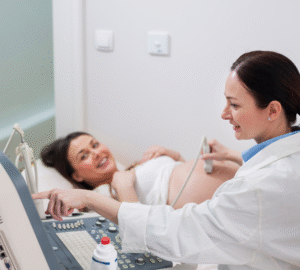
Advanced transvaginal sonography (TVS) for chronic pelvic pain requires a dynamic approach. We utilize the MUSA (Morphological Uterus Sonographic Assessment) criteria for adenomyosis and a dedicated four-step protocol for endometriosis (Collins et al., 2019). We do not just look at static pictures; we assess how your pelvic organs move and slide against each other in real-time.
Comparison: Standard Findings vs. Advanced Diagnostic Markers
| Pathology | What Standard Clinics Report | The Advanced Ultrasound Markers We Find |
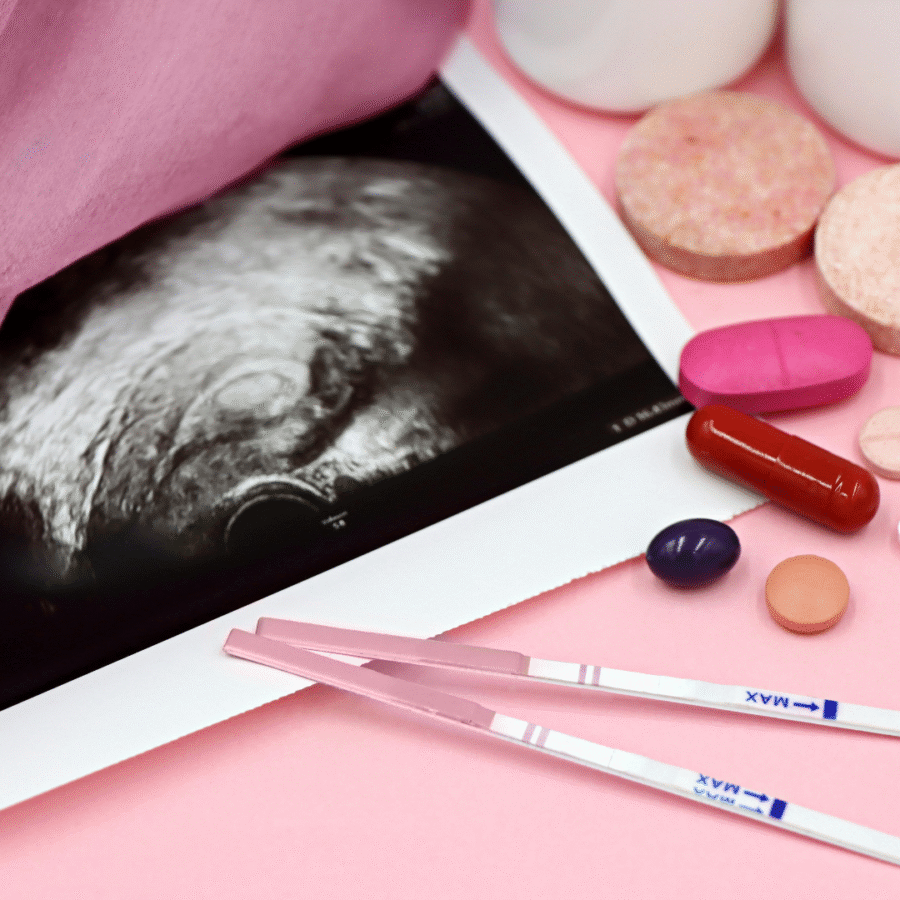
| Adenomyosis | “Bulky uterus,” “Thickened lining,” or “Normal” | Asymmetrical myometrial thickening, subendometrial echogenic linear striations, myometrial cysts, and “venetian blind” shadowing (An, n.d.). |
| Ovarian Endometrioma | “Complex hemorrhagic cyst” | Cystic lesions featuring a “ground glass” appearance with no internal vascularity, occasionally showing dependent hyperechoic material (Van den Bosch & Van Schoubroeck, 2018). |
| Deep Infiltrating Endometriosis (DIE) | “Normal scan” | Hypoechoic linear nodules in the uterosacral ligaments or rectovaginal septum; negative “sliding sign” indicating organs are fused by adhesions (Collins et al., 2019). |
| Tubal Involvement | “Normal adnexa” | Hydrosalpinx demonstrating the “cogwheel sign” indicating fluid-filled, damaged fallopian tubes resulting from chronic pelvic inflammation. |
When the sliding sign is negative—meaning the uterus and the bowel do not glide freely against each other when gentle probe pressure is applied—it is a massive red flag for severe adhesions and deep pelvic endometriosis. Identifying these markers before surgery allows our surgical team at Karthika Woman and Child Care to map the disease precisely, reducing operative surprises and drastically improving surgical outcomes.
Expert Surgical Excision & Comprehensive Management Strategies
Managing chronic pelvic pain requires a multi-disciplinary arsenal. Medication can suppress symptoms, but it does not eradicate the disease.
Laparoscopic Excision Surgery (The Gold Standard)
For complex endometriosis, ablation (burning the surface of the lesions) is obsolete. The gold standard is laparoscopic excision surgery. We cut the disease out at its root, including the deep infiltrating nodules on the bowel or bladder. This is highly advanced, minimally invasive surgery that restores normal pelvic anatomy and provides the most significant, long-term pain relief.
Targeted Adenomyosis Management
Adenomyosis is notoriously difficult to treat surgically without removing the uterus entirely. While hysterectomy is the definitive cure for adenomyosis, it is not an option for women who want to preserve their fertility. For fertility preservation, we utilize advanced medical modulation, including specific progestins, GnRH agonists, or the Levonorgestrel intrauterine system (Mirena), to shrink the adenomyotic tissue and control heavy bleeding. In highly select cases, focal adenomyomectomy (surgically removing localized adenomyosis) can be performed.
Fertility Preservation & Assisted Reproduction (IVF)
Both adenomyosis and endometriosis create a hostile, inflammatory environment for embryos. They distort the pelvic anatomy, block fallopian tubes, and degrade egg quality. If you are struggling to conceive, our dedicated fertility wing steps in. We offer tailored In-Vitro Fertilization (IVF) and Intrauterine Insemination (IUI) protocols designed specifically for the inflammatory pelvic environment. Furthermore, for patients facing extensive excision surgery or those with severe ovarian endometriomas, we strongly recommend proactive Oocyte (Egg) Freezing prior to surgery to protect your ovarian reserve.
Why Karthika Woman and Child Care is Your Sanctuary for Healing
You do not have to live in pain. You do not have to accept a vague diagnosis. At Karthika Woman and Child Care, we specialize in the most complex reproductive health challenges, from Recurrent Implantation Failure and PCOS Management to advanced Hysteroscopy and Laparoscopy.
We listen. We utilize cutting-edge dynamic ultrasound mapping. We formulate precise, aggressive treatment plans that prioritize your quality of life and your reproductive goals. Your pain is real, and it is treatable.
Frequently Asked Questions (FAQ)
Can you have both adenomyosis and endometriosis at the same time?
Yes. In fact, they frequently coexist. Studies indicate that a significant percentage of patients with deep infiltrating endometriosis also have concurrent adenomyosis. Treating one while ignoring the other often leads to persistent chronic pelvic pain.
Will an MRI show adenomyosis better than an ultrasound?
MRI is excellent and offers high specificity, especially when multiple large fibroids obscure the view. However, advanced 3D Transvaginal Sonography (TVS) performed by an expert is equally accurate for diagnosing adenomyosis and is the preferred first-line modality due to its accessibility and dynamic capabilities (An, n.d.).
Does adenomyosis always require a hysterectomy?
No. While a hysterectomy is the only definitive cure for adenomyosis, we offer numerous conservative and fertility-preserving management strategies, including targeted hormonal therapies, IUDs, and specialized IVF protocols for patients wishing to conceive.
Why does my regular doctor keep missing my endometriosis on ultrasounds?
Superficial endometriosis cannot be seen on any standard scan. Even deep infiltrating endometriosis requires a specialized dynamic ultrasound protocol (assessing organ mobility and looking for specific hypoechoic nodules) that requires specific training well beyond standard obstetrical ultrasound protocols.
Does excision surgery cure endometriosis forever?
Excision surgery is the most effective treatment for removing existing disease and relieving pain. However, endometriosis is a chronic condition, and there is always a risk of recurrence. We typically combine expert excision with post-operative medical suppression to minimize the chances of the disease returning.