You just heard the diagnosis: adenomyosis. The ultrasound showed a bulky, thickened uterus, and immediately, your mind jumped to the worst-case scenario. Will my body reject an embryo? Can I ever carry a pregnancy to term? The fear of recurrent implantation failure and pregnancy loss is paralyzing. But a diagnosis of adenomyosis is not the end of your fertility journey. It demands a specialized, highly strategic medical approach.
At Karthika Woman & Child Care, we navigate complex uterine environments daily. Understanding how adenomyosis alters your reproductive system allows us to manipulate those variables, suppress the disease, and create a welcoming environment for an embryo. Here is exactly how we approach adenomyosis to protect your fertility and secure a healthy pregnancy.
The Architecture of Adenomyosis
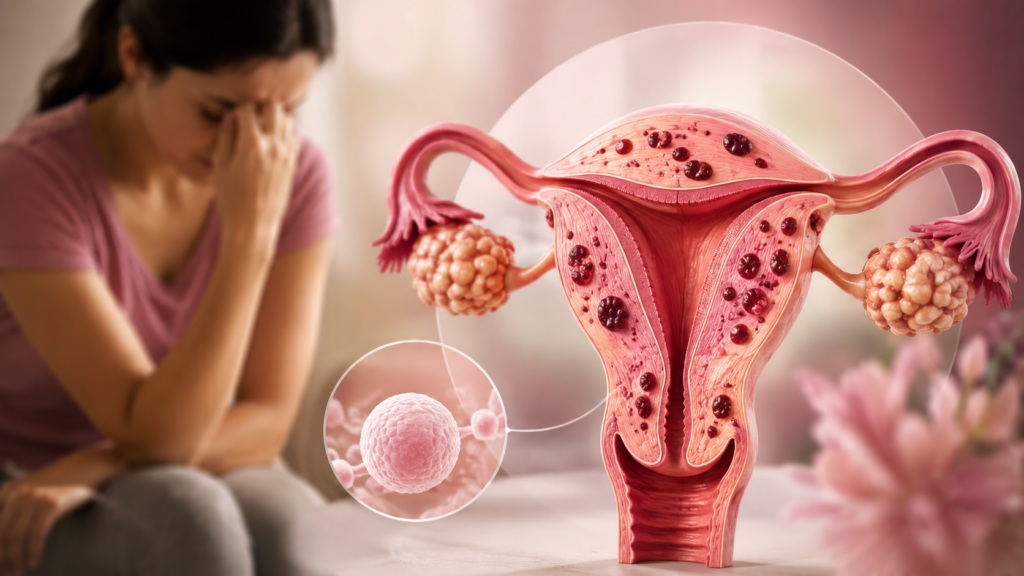
Adenomyosis occurs when the endometrial tissue, the lining that typically sheds during your period, invades deep into the myometrium, the muscular wall of the uterus. Instead of shedding cleanly, this trapped tissue bleeds internally during every cycle. The surrounding muscle swells, leading to a globally enlarged, “boggy” uterus, severe menstrual cramps, and heavy bleeding.
How Adenomyosis Impacts Fertility and Implantation
Adenomyosis is essentially an estrogen-dependent inflammatory storm. When you are trying to conceive naturally or through basic fertility treatments, this structural and chemical disruption acts as a hostile barrier to implantation.
Here is what happens inside an adenomyotic uterus:
- Hyper-Inflammation: The trapped endometrial cells trigger a massive immune response. The uterus floods with free radicals and inflammatory markers, creating a toxic environment for a fragile embryo.
- Altered Uterine Peristalsis: A healthy uterus gently contracts to guide sperm to the egg and keep the embryo securely in place. Adenomyosis causes erratic, hyperactive uterine spasms that can quite literally expel an implanting embryo.
- Hormonal Imbalance: The lesions generate excessive local estrogen (hyperestrogenism), which throws off the delicate progesterone balance required to make the uterine lining sticky and receptive during the implantation window.
Research shows that women with untreated moderate to severe adenomyosis face lower clinical pregnancy rates and notably higher miscarriage rates. Standard In-Vitro Fertilization (IVF) protocols often fail because they expose the body to high estrogen levels during egg retrieval, which feeds the adenomyosis and worsens the inflammation.
The Game Changer: Prolonged Down-Regulation Before IVF
To bypass the hostile environment caused by adenomyosis, we must fundamentally alter the uterine climate before transferring an embryo. The gold standard for achieving this is the ultra-long down-regulation protocol followed by a Frozen Embryo Transfer (FET).
Instead of transferring a fresh embryo immediately after retrieving your eggs, we freeze the embryos. Then, we hit the pause button on your reproductive system.
The Ultra-Long Protocol Process
- Oocyte Retrieval & Freezing: We stimulate your ovaries, retrieve the eggs, fertilize them, and freeze the resulting high-quality blastocysts.
- Medical Menopause (Down-Regulation): We administer Gonadotropin-Releasing Hormone (GnRH) agonists (such as depot injections) for two to three months. This induces a temporary, reversible menopausal state.
- Lesion Shrinkage: By starving the body of estrogen, the adenomyotic lesions shrink. The uterus physically decreases in volume, the junctional zone thins out, and the rampant inflammation subsides.
- Controlled Thaw and Transfer: Once the uterus is quiet, structurally optimized, and free of erratic contractions, we carefully rebuild the endometrial lining using synthetic hormones (HRT) and transfer the frozen embryo.
This prolonged suppression approach significantly improves clinical pregnancy rates and reduces miscarriage risk by giving the embryo a calm, non-inflammatory environment to implant.
Adenomyosis vs. Endometriosis: What’s the Difference?
Patients frequently confuse adenomyosis with endometriosis, and many women actually suffer from both simultaneously. Understanding the distinction dictates the clinical management strategy.
| Feature | Adenomyosis | Endometriosis |
| Location of Tissue | Inside the muscular wall of the uterus (myometrium). | Outside the uterus (ovaries, fallopian tubes, pelvic lining). |
| Impact on Uterus | Enlarges the uterus globally; causes thickening and distorted uterine architecture. | Uterus remains normal size; creates scar tissue (adhesions) externally. |
| Primary Fertility Threat | Impairs embryo implantation (receptivity) and increases miscarriage risk. | Distorts pelvic anatomy, blocks fallopian tubes, and degrades egg quality. |
| Surgical Options | Highly difficult to remove surgically without compromising the uterine wall. | Lesions can often be excised via Laparoscopy to restore pelvic anatomy. |
Protecting Your Pregnancy: High-Risk Maternity Care
Getting pregnant with adenomyosis is a massive victory, but the condition requires vigilant obstetrics care. The altered muscular structure of the uterus increases the risk of premature membrane rupture, preterm labor, and fetal growth restriction.
At Karthika Woman & Child Care, the transition from our fertility specialists to our high-risk maternity team is seamless. We monitor your cervical length meticulously, utilize progesterone supplementation to keep the uterus relaxed, and chart fetal growth curves to ensure the placenta is functioning optimally despite the underlying myometrial disease.
Frequently Asked Questions
Can I get pregnant naturally with adenomyosis?
Yes. Mild adenomyosis may not entirely prevent natural conception. However, moderate to severe cases heavily distort the uterine cavity and create an inflammatory environment that makes natural implantation highly difficult. If you have been trying for over six months with known adenomyosis, consulting a fertility specialist is strongly advised.
Does adenomyosis affect egg quality?
No. Adenomyosis is strictly a disease of the uterus. It impacts embryo implantation and pregnancy maintenance. If you are pursuing Oocyte (Egg) Freezing, adenomyosis will not degrade the genetic quality of the eggs retrieved.
Will I need a hysterectomy to cure adenomyosis?
A hysterectomy is the only definitive “cure” for adenomyosis, but it is strictly reserved for women who have completed their families and suffer from debilitating pain or bleeding. For women actively trying to conceive, medical management via GnRH down-regulation and specialized IVF protocols is the primary treatment path.