You know your body. You know the searing, sharp agony that strikes every month, sometimes radiating down your legs or pulling at your lower back. Yet, you sit in another doctor’s office, clutching a medical report that boldly claims your ultrasound is “perfectly normal.” The pain is debilitating. The exhaustion is overwhelming. The doubt from medical professionals is maddening.
If you are suffering from chronic pelvic pain and have been told it’s “just a bad period,” you are likely caught in the diagnostic gap between complex endometriosis and adenomyosis. These conditions do not belong in the shadows of standard primary care. They demand precision diagnostics, highly skilled surgical excision, and an integrated management approach. At Karthika Woman & Child Care in Bengaluru, we recognize this struggle. We stop the guesswork and start the healing.
Why Standard Clinics Miss the Diagnosis
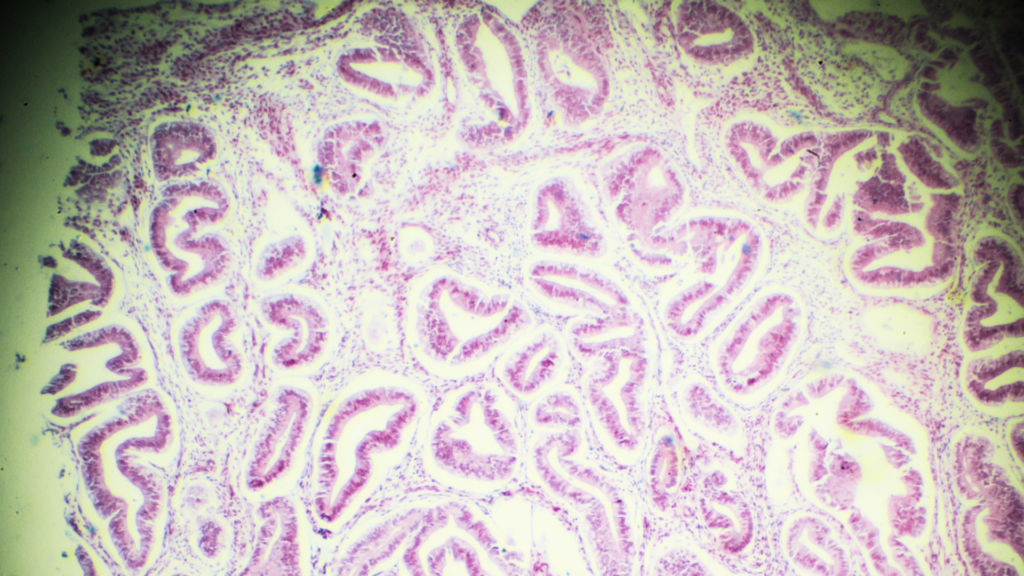
Endometriosis occurs when tissue similar to the lining of the uterus grows outside it, binding organs together with scar tissue. Adenomyosis, its destructive cousin, happens when that same tissue aggressively invades the muscular wall of the uterus itself. They frequently coexist, amplifying pelvic pain, heavy bleeding, and severe fertility challenges.
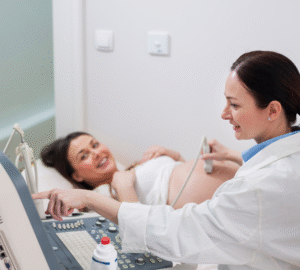
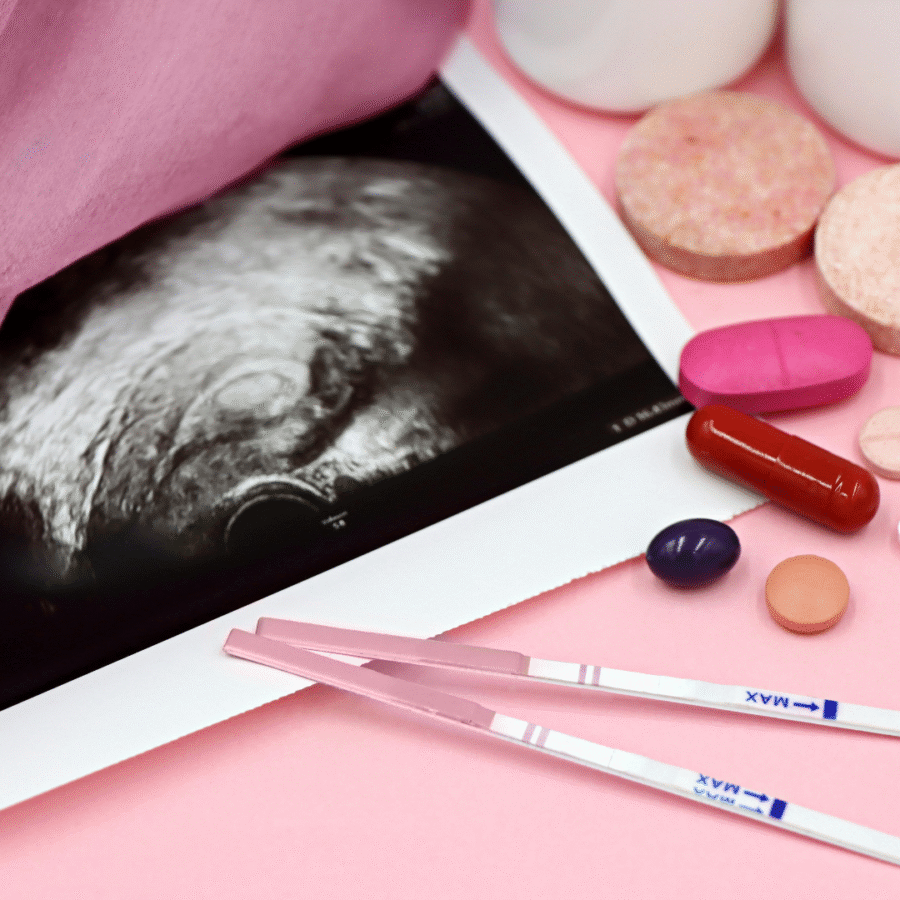
Why are these conditions missed for an average of seven to ten years? Most standard pelvic ultrasounds only look for massive, obvious abnormalities like large fibroids or clear ovarian cysts. Superficial peritoneal endometriosis lesions—often referred to as “gunshot” lesions or clear blebs, are too microscopic to cast a shadow on standard imaging.
But the real diagnostic failure happens with adenomyosis. Unless a sonographer is specifically trained to look for nuanced architectural changes in the uterine wall, the disease remains invisible.
The Ultrasound Blind Spot: MUSA Criteria
To properly diagnose adenomyosis and deep infiltrating endometriosis (DIE), experts rely on the Morphological Uterus Sonographic Assessment (MUSA) criteria. This is the dividing line between an expert diagnosis and a missed opportunity.
A high-resolution transvaginal ultrasound (TVS) evaluating MUSA criteria separates features into two distinct categories: direct signs (actual ectopic endometrial tissue in the myometrium) and indirect signs (secondary structural damage caused by the disease).
| Feature Category | Ultrasound Markers (MUSA Criteria) | Clinical Significance |
| Direct Features | Myometrial cysts, hyperechogenic islands, echogenic sub-endometrial lines, and buds. | Confirms the physical presence of ectopic glands trapped inside the uterine muscle. |
| Indirect Features | Globular uterine shape, asymmetrical wall thickening, fan-shaped shadowing, irregular junctional zone. | Indicates structural distortion and inflammation caused by the trapped tissue. |
| Soft Markers | Site-specific tenderness, reduced organ sliding (fixed ovaries/uterus). | Highly suggestive of active pelvic adhesions and deep infiltrating endometriosis. |
When patients have both endometriosis and adenomyosis simultaneously, their ultrasounds predominantly show indirect features like a globular uterus and asymmetrical thickening. Standard clinics routinely mistake this for a bulky uterus or dismiss it entirely.
Advanced Management: Excision Surgery and Beyond
Medication can suppress your cycle. Hormonal therapies can mask the symptoms. But neither removes the disease. For women demanding their quality of life back, expert surgical intervention remains the gold standard.
Laparoscopic Excision Surgery
Ablation (burning the surface of the lesions) is an outdated approach with exceptionally high recurrence rates. Excision surgery—cutting the disease out at its root, is the definitive treatment for complex endometriosis.
During advanced laparoscopy, a skilled surgeon methodically maps the pelvis. They detach fused organs, excise deep nodules from the uterosacral ligaments or bowel, and restore normal pelvic anatomy.
Addressing Adenomyosis
Adenomyosis complicates the surgical picture because the disease is integrated into the uterine muscle. You cannot simply peel it away.
- Fertility-Sparing Approaches: For women looking to conceive via natural methods or In-Vitro Fertilization (IVF), management involves a combination of targeted hormonal suppression and specialized embryo transfer protocols.
- Definitive Treatment: For those who have completed their families and suffer from refractory pain and bleeding, a hysterectomy offers absolute symptom resolution for adenomyosis.
Comprehensive Care at Karthika Woman & Child Care
At Karthika Woman & Child Care, Dr. Divya Venugopalan leads a clinical approach built on compassionate listening and uncompromising medical precision. From advanced transvaginal mapping to complex laparoscopy and fertility preservation (including IVF and egg freezing), we treat the whole patient.
We do not dismiss pelvic pain. We locate the source, build a targeted intervention plan, and support you through recovery, fertility treatments, and long-term hormonal management.
Frequently Asked Questions
Can I have both endometriosis and adenomyosis at the same time?
Yes. Studies show that concurrent adenomyosis is found in up to 73% of patients with diagnosed endometriosis. Having both significantly amplifies chronic pelvic pain and heavily impacts fertility outcomes.
Why did my previous MRI or ultrasound miss my adenomyosis?
Diagnosis requires looking for very specific criteria, such as a thickened junctional zone (greater than 12 mm) or tiny myometrial cysts. If the radiologist or sonographer is not explicitly trained in the MUSA criteria or deep endometriosis mapping, these subtle markers are routinely overlooked.
Will a hysterectomy cure my endometriosis?
A hysterectomy cures adenomyosis (which is confined to the uterus). However, because endometriosis exists outside the uterus, removing the uterus without excising the extra-uterine lesions will not cure the disease or completely resolve your pain. Expert excision of all pelvic lesions is required.