A positive pregnancy test brings immense joy, but if you have been flagged as a high-risk case due to advanced maternal age, hypertension, or gestational diabetes, that excitement can quickly turn into anxiety. Waiting weeks between distant hospital visits only compounds the stress when what you need is highly specialized, close-to-home monitoring. If you are looking for an experienced maternity hospital near Jakkur lake, establishing early, precise clinical care is your most critical next step. At Karthika Woman & Child Care, we turn clinical complexity into manageable, clear steps for a safe delivery.
Navigating a high-risk pregnancy requires more than just standard prenatal checkups. It demands a proactive strategy, state-of-the-art diagnostic screening, and an obstetric team capable of making definitive, data-driven decisions when complications arise.
Defining High-Risk Pregnancy: Beyond the Labels
A pregnancy is classified as high-risk whenever there are medical factors that increase the likelihood of complications for either the mother or the baby. This classification does not guarantee a poor outcome; rather, it serves as a clinical signal for increased vigilance and tailored monitoring.
Advanced Maternal Age (35 and Older)
Entering pregnancy at age 35 or older changes the clinical approach. Oocyte (egg) quality naturally declines over time, increasing the baseline probability of chromosomal variations. Statistically, miscarriage risks rise from roughly 10–17% in a woman’s twenties to 20% at age 35, and up to 40% by age 40. Furthermore, older blood vessels adapt less flexibly to the increased blood volume of pregnancy, which elevates the risk of developing gestational hypertension.
Pre-Existing and Gestational Conditions
Chronic hypertension, pre-existing type 2 diabetes, thyroid imbalances, or conditions like adenomyosis and severe PCOS alter the uterine environment. Additionally, conditions that develop exclusively during pregnancy, such as Gestational Diabetes Mellitus (GDM) or preeclampsia, can impact placental health and fetal growth if left unmanaged. Securing consistent pregnancy care in Jakkur ensures these metrics are stabilized before they escalate.
Comprehensive Screening and Diagnostics
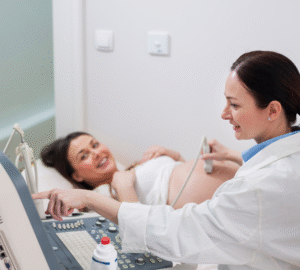
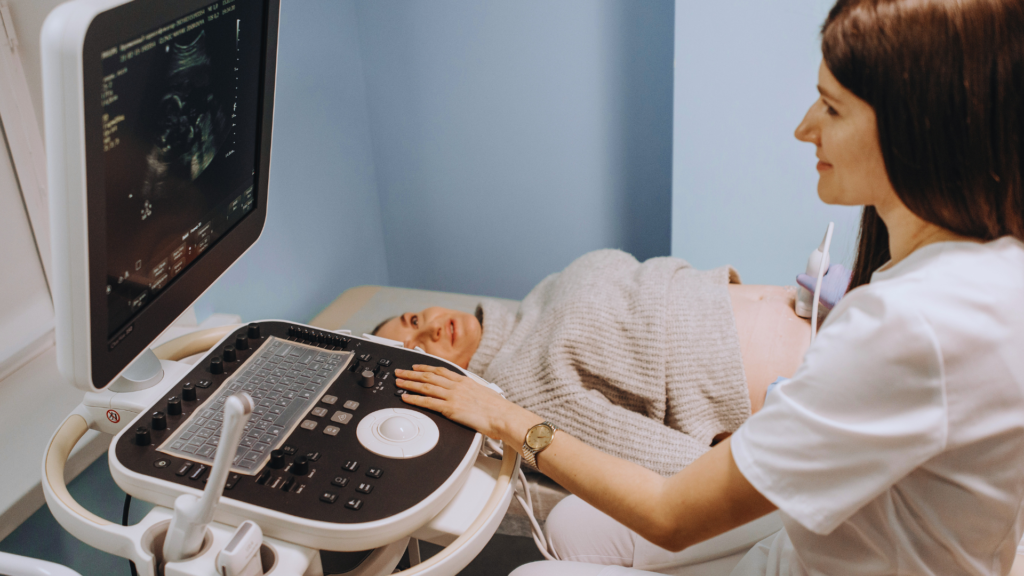
Managing risk begins with precise timeline tracking and advanced diagnostic technology. We do not rely on guesswork; we track specific biomarkers and fetal metrics to stay ahead of potential issues.
- First Trimester (Weeks 1–13): Focuses on accurate dating via ultrasound and screening for genetic conditions. Non-Invasive Prenatal Testing (NIPT) analyzes cell-free fetal DNA circulating in the maternal bloodstream, providing early screening for chromosomal conditions with high accuracy.
- Second Trimester (Weeks 14–27): The structural anomaly scan evaluates fetal organ development, placental positioning, and amniotic fluid volume. This is also when we initiate an early Oral Glucose Tolerance Test (OGTT) if maternal risk factors are present.
- Third Trimester (Weeks 28–40): Monitoring shifts toward fetal growth and placental perfusion. We utilize Doppler ultrasounds to track blood flow through the umbilical artery, ensuring the fetus receives optimal oxygenation and nutrients.
Risk Profiles and Clinical Protocols by Age Group
Understanding how risk scales with age allows our team to customize your prenatal roadmap. The table below outlines how standard clinical protocols shift based on maternal age to safeguard both mother and child.
| Maternal Age Group | Key Statistical Risks | Standard Clinical Protocols |
| Under 35 Years | Baseline tracking; standard risk for gestational conditions unless accompanied by a high body mass index (BMI) or history of PCOS. | Four standard antenatal checkups; routine anomaly scan; standard GDM screening at 24–28 weeks. |
| 35 to 39 Years | 20% miscarriage risk; increased incidence of preeclampsia and GDM; slight elevation in stillbirth risk near term. | Early NIPT screening; low-dose aspirin prophylaxis if secondary risk factors exist; 36-week growth ultrasound. |
| 40 Years and Older | 40% baseline miscarriage risk; elevated rate of placental insufficiency; higher incidence of late-term complications. | Twice-weekly Non-Stress Tests (NST) and Amniotic Fluid Index (AFI) checks starting at 38 weeks; recommendation for planned delivery or induction at 39 weeks. |
Emergency Transit Protocol and Complications Checklist
In high-risk obstetrics, proximity to your care facility matters most during critical moments. Sudden third-trimester complications, such as a sharp spike in blood pressure or unexplained spotting, require rapid intervention. Karthika Woman & Child Care utilizes a specialized framework to manage these urgent scenarios efficiently.
Localized Third-Trimester Emergency Transit Protocol
1
Immediate Triage Communication
Minutes 0–5
1.Immediate Triage Communication:Minutes 0–5.
The patient or family calls our dedicated emergency line. A senior triage nurse assesses symptoms (e.g., severe headache, visual blurring, sudden epigastric pain, or fluid leakage) and activates the in-house obstetric team.
2
Route Optimization via Jakkur Corridor
Minutes 5–15
2.Route Optimization via Jakkur Corridor:Minutes 5–15.
While the patient is in transit, our coordinator maps the fastest local route, avoiding peak bottleneck areas around the Hebbal flyover or Jakkur road construction, to ensure arrival within minimal time frames.
3
In-Transit Pre-Admission
Minutes 15–20
3.In-Transit Pre-Admission:Minutes 15–20.
Our administrative team pulls the patient’s digital health records, cross-referencing past lab values, blood type, and high-risk markers while the patient is still on the way.
4
Direct Labor & Delivery Transfer
Arrival
4.Direct Labor & Delivery Transfer:Arrival.
Upon arrival, the patient bypasses the standard waiting room completely. They are transferred directly to a monitored bed or the operating theater for immediate evaluation by the attending specialist.
First-Party Clinical Complications Checklist
When an expectant mother presents with acute symptoms, our clinical team follows a rigorous internal checklist to stabilize both patients simultaneously:
- Continuous Fetal Monitoring: Immediate application of a cardiotocograph (CTG) to monitor fetal heart rate variability and check for decelerations.
- Hypertensive Stabilization: If blood pressure reads ≥140/90 mmHg, we initiate regular automated cycling measurements and evaluate for preeclampsia markers. For critical pressures (≥160/110 mmHg), protocol-driven intravenous antihypertensives are administered to lower stroke risk.
- Seizure Prophylaxis: In confirmed severe preeclampsia, a continuous magnesium sulfate infusion is established, strictly following weight-based dosing and monitoring maternal reflexes.
- Steroid Administration: If preterm delivery before 37 weeks is anticipated, we immediately administer the first dose of corticosteroids to accelerate fetal lung maturation.
Choosing the Best Obstetrician in North Bengaluru
Managing a complex pregnancy requires an experienced specialist who listens to your concerns. When looking for the best obstetrician in North Bengaluru, prioritize a consultant who integrates advanced evidence-based medicine with clear communication.
At Karthika Woman & Child Care, we understand that high-risk care is not a one-size-fits-all solution. Whether you are managing a pregnancy achieved through advanced fertility treatments like IVF or IUI, or navigating medical challenges later in life, our clinic provides close-to-home monitoring near Jakkur Lake. We prioritize your physical safety and peace of mind by keeping your primary care team accessible throughout your journey.
Frequently Asked Questions
What officially makes a pregnancy “high-risk”?
A pregnancy is deemed high-risk if factors like maternal age (under 18 or over 35), pre-existing chronic conditions (hypertension, diabetes, thyroid disorders), multiple gestations (twins or triplets), or pregnancy-induced conditions like preeclampsia or gestational diabetes are present.
Can I still have a normal vaginal delivery with a high-risk pregnancy?
Yes. A high-risk designation does not automatically mean you will require a cesarean delivery. Many women with high-risk factors successfully deliver vaginally. The delivery method depends heavily on fetal health, placental positioning, and maternal stability at term.
How frequently will I need checkups for a high-risk pregnancy?
While a standard pregnancy requires monthly visits initially, a high-risk pregnancy often demands bi-weekly or weekly monitoring, especially during the third trimester. Advanced maternal age cases over 40 typically involve twice-weekly checks starting at week 38.
Why is low-dose aspirin prescribed during some pregnancies?
Obstetricians frequently prescribe low-dose aspirin starting around week 12 for individuals with moderate-to-high risk factors for preeclampsia. It helps optimize placental blood flow and reduces the likelihood of developing severe gestational hypertension.