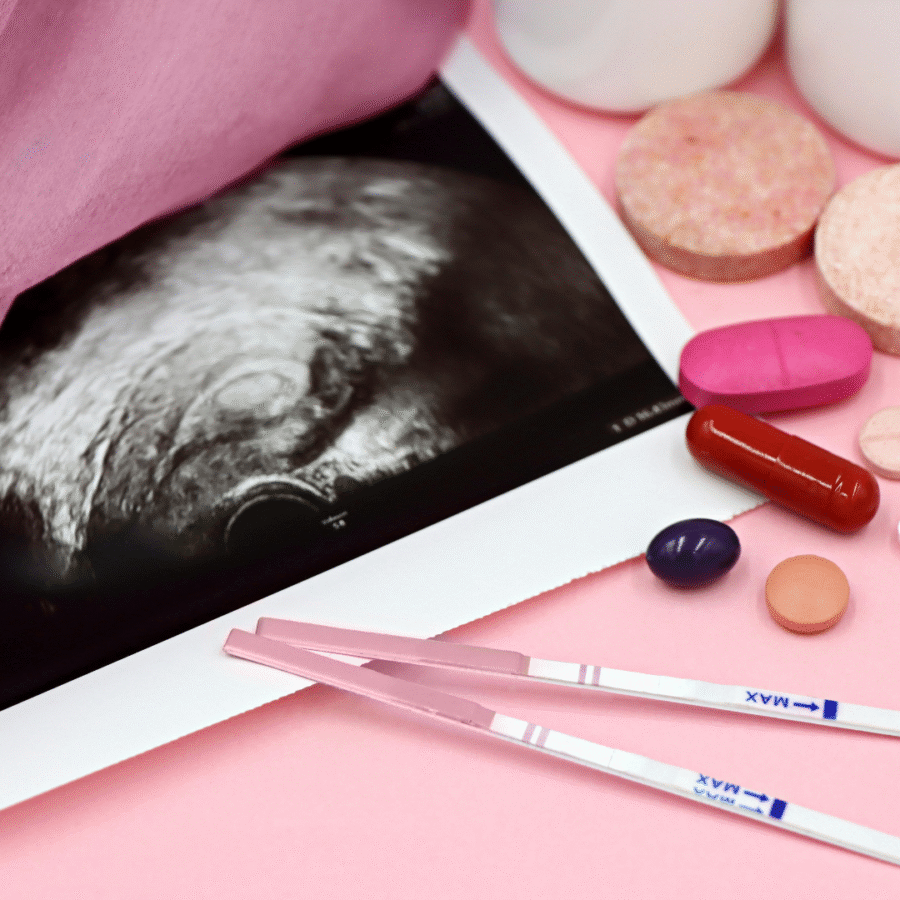
You are pushing boundaries. You wake up early, crush a HIIT workout, drink a green smoothie, and head into back-to-back executive meetings. To the outside world, you are the picture of relentless health and productivity. But beneath the surface, your body is silently sounding an alarm. You are experiencing a female menses problem—your period has vanished entirely.
When a problem during menstruation escalates to a complete cessation of your cycle for three months or more, it is not a convenient perk of being fit or busy. It is a metabolic cry for help known as Functional Hypothalamic Amenorrhea (FHA). For high-achieving women trying to balance a demanding career with intense fitness regimens, this hormonal shutdown acts as a severe roadblock, particularly if you are planning to start a family. The body simply refuses to ovulate when it feels chronically threatened.
We need to fix the deficit. Your future fertility depends on it.
The Biology of Burnout: Functional Hypothalamic Amenorrhea (FHA)
FHA occurs when the brain’s command center—the hypothalamus—detects extreme physical, emotional, or nutritional stress. In response, it radically alters the endocrine system to prioritize survival over reproduction.
Why Your Brain Hit the “Pause” Button
The hypothalamus produces gonadotropin-releasing hormone (GnRH). GnRH acts as the spark plug for reproduction. When you under-eat, over-train, or face immense corporate pressure, GnRH pulses slow down or stop altogether. Your pituitary gland notices this silence and halts the release of follicle-stimulating hormone (FSH) and luteinizing hormone (LH). Without LH and FSH, your ovaries cease estrogen production. Ovulation fails. Your period disappears.
Two distinct hormones drive this suppression: leptin and kisspeptin. Leptin, produced by fat cells, serves as a biological fuel gauge. When your body fat or caloric intake drops, leptin levels plummet. This decline silences kisspeptin, the neuropeptide responsible for directly stimulating GnRH. Your brain interprets the combination of a high-stress corporate job, restrictive eating, and heavy exercise as a famine environment.
The Energy Availability Equation: The Missing Link for Urban Women
Most high-performing professionals do not realize they are starving. You might eat what looks like a healthy amount of food, but you are failing a critical metabolic test.
Energy availability (EA) is the amount of fuel left over for essential bodily functions after you subtract the calories burned during exercise. It is the definitive metric for female reproductive health.
Calculating the Deficit
The clinical equation dictates your hormonal output:
EA = (Dietary Energy Intake – Exercise Energy Expenditure) / Fat-Free Mass (FFM)
Research consistently proves that women need an energy availability of at least 30 kcalMeta Title: Overcoming the Female Menses Problem: Amenorrhea in High-Performers
Overcoming the Female Menses Problem: Amenorrhea in High-Performance Professionals
You run a corporate division, hit the gym five days a week, and meticulously track your macros. From the outside, you project absolute peak health. But behind closed doors, your body is sounding a silent alarm. Your menstrual cycle vanished months ago.
At first, you might have dismissed the absence. It felt like a temporary problem during menstruation triggered by a heavy quarter at work, or perhaps even a convenient break from monthly cramps. But now you are ready to start a family. Reality sets in quickly: a missing period means you are not ovulating.
This specific female menses problem is rarely a structural defect. It is a biological SOS. As specialists at Karthika Woman and Child Care, we treat this exact presentation weekly. Driven, high-achieving urban women routinely push their bodies past a critical metabolic threshold, resulting in Functional Hypothalamic Amenorrhea (FHA).
Here is the exact biological mechanism behind why your brain shut down your reproductive system—and the clinical roadmap to restoring your fertility.
The Neurology of a Missing Period: Functional Hypothalamic Amenorrhea (FHA)
Your reproductive system does not operate independently. It takes direct orders from the hypothalamus—the command center in your brain responsible for regulating temperature, hunger, stress, and reproduction.
When your environment feels safe and adequately fueled, the hypothalamus releases Gonadotropin-Releasing Hormone (GnRH) in rhythmic pulses. This signals your pituitary gland to release Luteinizing Hormone (LH) and Follicle-Stimulating Hormone (FSH), eventually prompting your ovaries to release an egg.
When you stack chronic corporate stress, high-intensity workouts, and a restrictive diet, your hypothalamus perceives a famine. Survival takes immediate priority. Reproduction is deemed a non-essential luxury. The brain suppresses GnRH pulses, your estrogen plummets, and your cycle stops entirely.
The Core Metric: The “Energy Availability” Equation
Many professionals insist they eat enough because they consume 1,800 to 2,000 calories a day. But raw caloric intake is irrelevant if your output vastly exceeds it. In reproductive endocrinology, we rely on a precise formula to determine if your body has the baseline fuel required to sustain a pregnancy: Energy Availability (EA).
The equation is:
EA = (Dietary Calories Consumed – Calories Burned During Exercise) / Kilograms of Fat-Free Mass (FFM)
The 30 kcal/kg Threshold
To maintain optimal reproductive health, a woman needs an EA of roughly 45 kcal/kg of FFM per day.
When your EA drops below 30 kcal/kg of FFM per day, the reproductive system goes dark. This is the physiological tipping point where FHA begins. You do not need to look underweight to hit this dangerous threshold. We frequently consult women with normal BMIs who are severely energy-deficient because their baseline metabolic needs plus their intense workout routines drain their available fuel reserves.
Why Urban Professionals Are Highly Susceptible
High-performance environments breed habits that actively suppress the Hypothalamus-Pituitary-Ovarian (HPO) axis.
Chronic Stress and the Cortisol Trap
Emotional stress acts identically to physical starvation in the brain. A high-pressure career keeps cortisol levels chronically elevated. Elevated cortisol directly suppresses kisspeptin—a crucial neuropeptide that stimulates GnRH release. The higher your cortisol climbs during back-to-back boardroom meetings, the harder your brain hits the brakes on your reproductive hormones.
The “Clean Eating” Deficit
Urban professionals often adopt high-fiber, low-fat diets to maintain a specific physique. While these diets look great on paper, they create massive unintentional energy deficits. Fats and complex carbohydrates are the literal building blocks of reproductive hormones. Stripping them from your diet starves your endocrine system.
The Path to Restoration and Fertility
If your goal is to start a family, waiting for your cycle to magically reappear while maintaining the same lifestyle is not a viable strategy. We must actively reverse the energy deficit and signal safety to your brain.
1. Aggressive Nutritional Rehabilitation
You must eat more. Specifically, you need to increase your intake of energy-dense foods. We often require patients to push their body fat percentage slightly higher (often above 22%) to trigger a return of menstruation. Do not fear healthy fats; embrace avocados, nuts, full-fat dairy, and olive oil.
2. Strategic Exercise Modification
You cannot out-train a suppressed hypothalamus. High-intensity interval training (HIIT), heavy lifting, and long-distance running must stop. Cap your movement at 30 to 40 minutes of low-impact exercise like walking, restorative yoga, or light swimming. This is not a permanent ban, but rather a temporary medical necessity to lower your cortisol load and preserve energy availability.
3. Clinical Fertility Interventions
While lifestyle modifications are the first line of defense, time is often a critical factor for women looking to conceive. At a specialized womens and childrens hospital setting like Karthika Woman and Child Care, we deploy targeted medical protocols when FHA proves resistant to lifestyle changes alone.
- Ovulation Induction: We utilize customized protocols using medications to stimulate the ovaries and bypass the dormant hypothalamus.
- Intrauterine Insemination (IUI) & In-Vitro Fertilization (IVF): For patients facing prolonged FHA or concurrent issues like diminished ovarian reserve, IVF offers a highly controlled pathway to pregnancy.
- Oocyte (Egg) Freezing: If you are correcting FHA now but plan to conceive later, proactive egg preservation protects your timeline.
Understanding the Clinical Impact
Comparing a healthy cycle to an FHA state reveals exactly how deeply low energy availability impacts your physiology.
| Biomarker / Metric | Healthy Reproductive Function | Functional Hypothalamic Amenorrhea (FHA) |
| Energy Availability (EA) | ≥ 45 kcal/kg FFM/day | < 30 kcal/kg FFM/day |
| GnRH Pulsatility | Rhythmic, high frequency | Suppressed, erratic, or absent |
| Cortisol Levels | Normal diurnal curve | Chronically elevated (survival mode) |
| Estrogen Production | Cyclical peaks supporting ovulation | Flatlined, mimicking early menopause |
| Bone Density | Maintained or building | Rapid loss (osteopenia/osteoporosis risk) |
Take Action Today
Ignoring a female menses problem out of convenience only jeopardizes your long-term bone density, cardiovascular health, and fertility. Your body is highly adaptable. Once you restore energy availability and manage your stress load, the reproductive system can wake up. Whether you need guidance on lifestyle rehabilitation, PCOS management, or advanced fertility treatments, our team is equipped to map out your specific recovery.
Frequently Asked Questions (FAQ)
How long does it take to get my period back after fixing my diet?
Recovery timelines vary based on how long you have been in an energy deficit. Most women see their periods return within 3 to 6 months of strict nutritional rehabilitation and exercise reduction. In more stubborn cases, it can take up to a year.
Can I still get pregnant if I have hypothalamic amenorrhea?
You cannot get pregnant naturally while you are actively experiencing FHA because you are not ovulating. However, once the underlying energy deficit is corrected, or through targeted clinical fertility treatments like ovulation induction or IVF, pregnancy is highly achievable.
Is this female menses problem the same as early menopause?
No. While both conditions feature absent periods and low estrogen, early menopause (Premature Ovarian Insufficiency) involves the depletion of your egg reserve. FHA simply means your eggs are dormant because your brain has temporarily paused the ovulation signals due to stress and low energy.