Your cycle has always arrived like clockwork—predictable down to the exact day. Suddenly, your calendar app is useless. Cycles are stretching to 45 days, shortening to 21, or vanishing entirely. When irregular periods issues strike during your prime reproductive years, it is more than just a scheduling nuisance; it is your endocrine system sounding an alarm.
Whether you are wrestling with a sudden periods problem or trying to decode confusing period issues while balancing career, health, and possibly family planning goals, finding clarity requires looking beneath the surface. At Karthika Woman & Childcare, we see how jarring these abrupt shifts can be. Let’s peel back the layers to uncover what your body is trying to tell you.
Why Your Cycle Suddenly Went Rogue: The PAS Framework
The Problem
You wake up realizing your period is weeks late, or you are bleeding unpredictably twice a month. You take a pregnancy test—it’s negative. Panic sets in.
The Agitation
Dr Google tells you everything from benign stress to early ovarian failure. You feel dismissed by generic advice telling you to “just relax” or go straight onto hormonal birth control without finding out why your axis broke down. Meanwhile, persistent irregular periods issues begin impacting your energy, skin, mood, and long-term fertility aspirations.
The Solution
A systematic, diagnostic-first approach. Hormonal imbalances don’t happen in a vacuum. By mapping out your symptoms, evaluating clinical biomarkers, and mapping out a precise investigative flowchart, we can pinpoint the root cause and restore harmony.
The Diagnostic Blueprint: Hyperprolactinemia vs. Thyroid Dysfunction vs. Hypothalamic Amenorrhea
When tracking down sudden period problems, clinicians look closely at the hypothalamic-pituitary-ovarian (HPO) axis. A disruption anywhere in this delicate feedback loop stalls ovulation.
Here is how clinicians differentiate the three most common culprits behind sudden cycle chaos:
1. Thyroid Dysfunction (Hypothyroidism or Hyperthyroidism)
Your thyroid gland acts as the thermostat for your entire body, including your reproductive organs. When thyroid hormone production dips (hypothyroidism), it blunts the signaling molecules required for ovulation, often resulting in heavy, frequent, or completely irregular cycles.
2. Hyperprolactinemia
Prolactin is the hormone responsible for milk production, but excess levels outside of pregnancy or nursing act as a natural contraceptive. Elevated prolactin shuts down GnRH (gonadotropin-releasing hormone), instantly halting ovulation and causing scanty or absent periods. Stress, certain medications, and tiny benign pituitary tumors (prolactinomas) are frequent triggers.
3. Functional Hypothalamic Amenorrhea (FHA)
Common in high-achieving women in their 20s and 30s, FHA occurs when the brain perceives an existential threat—such as severe psychological stress, sudden extreme weight loss, or intense over-exercising. The brain essentially pulls energy away from the “non-essential” reproductive system to keep you alive, stopping menstruation entirely.
Comparative Matrix: Key Culprits of Adult Menstrual Irregularities
| Condition | Primary Mechanism | Typical Cycle Presentation | Key Diagnostic Markers |
| Polycystic Ovary Syndrome (PCOS) | Androgen excess & insulin resistance | Infrequent ($>35$ days) or absent periods | Elevated Free Androgens, Antral Follicle Count on USG |
| Thyroid Disorders | Metabolic slowdown/speedup | Heavy, light, skipped, or erratic bleeding | High/Low TSH, Anti-TPO antibodies |
| Hyperprolactinemia | Pituitary overproduction of prolactin | Oligomenorrhea or secondary amenorrhea | Serum Prolactin levels $>25 \text{ ng/mL}$ |
| Functional Hypothalamic Amenorrhea | Suppression of GnRH pulse generator via stress/energy deficit | Absent periods (amenorrhea) for $>3$ months | Low-normal LH/FSH, low estradiol, normal structural scans |
Investigating Beyond the Basics: What to Expect at the Clinic
When you visit a specialized reproductive health center like Karthika Woman & Childcare, diagnosis goes beyond a superficial examination. We look at the full clinical picture to safeguard your short-term well-being and long-term vitality.
- Targeted Blood Work: We evaluate baseline hormone profiles, including FSH, LH, Estradiol, Prolactin, Thyroid panels, and fasting insulin-glucose metrics.
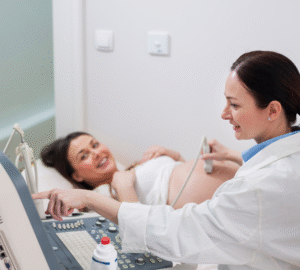
- Pelvic Ultrasonography: Transvaginal or transabdominal scans provide a direct look at ovarian morphology, endometrial thickness, and exclusion of structural factors like polyps or fibroids.
- Lifestyle & Metabolic Audit: We review nutritional habits, sleep architecture, and physiological stressors that quietly sabotage endocrine health.
Frequently Asked Questions
Can a sudden change in weight trigger irregular periods issues?
Yes. Rapid weight fluctuations—gain or loss—drastically alter leptin and estrogen storage. Adipose tissue functions as an active endocrine organ; dropping body fat too quickly signals metabolic distress to the brain, halting ovulation.
How long should I wait before seeing a doctor for a period problem?
If your cycle deviates significantly from your norm for more than two to three consecutive cycles, or if you experience sudden complete cessation for 90 days, schedule an evaluation immediately. Early intervention prevents prolonged hormonal disruption.
Are these sudden changes reversible?
In the vast majority of cases in your 20s and 30s, yes. Once the specific root cause—whether it is correcting a sluggish thyroid, stabilizing prolactin levels, or adjusting nutritional intake to reverse hypothalamic suppression—is addressed, normal ovulatory patterns frequently return.