Bringing a new life into the world alters your body’s mechanical foundation. Yet, when the initial rush of childbirth subsides, countless new mothers face a quiet, uncomfortable reality: leaking urine during a sudden cough, enduring persistent lower back ache, or discovering a noticeable, soft gap in their abdominal muscles.
Too frequently, women are told these physical changes are simply the price of motherhood. This is a dangerous misconception. While core weakness and pelvic floor dysfunction are incredibly common after delivery, they are not normal, and they certainly do not have to be permanent. Ignoring these symptoms can lead to long-term mobility issues and pelvic organ prolapse.
You do not have to live with a compromised core. By consulting a specialized postpartum recovery doctor near Amrutahalli at Karthika Woman and Child Care, you gain access to targeted, clinical rehabilitation that repairs your body from its deepest internal structures outward.
The Anatomy of Post-Pregnancy Core Dysfunction
During pregnancy, your internal support systems stretch to their absolute biomechanical limits. To heal effectively, you must address the specific anatomical structures affected by carrying and delivering a baby.
1. Pelvic Floor Trauma
Your pelvic floor acts as a muscular sling stretching from your pubic bone to your tailbone, physically supporting your bladder, uterus, and bowels.
The sustained pressure of a nine-month pregnancy, combined with the intense physical trauma of a vaginal delivery, frequently overstretches or tears this muscular hammock. This damage directly causes stress urinary incontinence (leaking when you jump or sneeze) and a heavy, dragging sensation in the pelvis. Dedicated pelvic floor rehab after delivery zeroes in on these specific muscle groups to restore their baseline tone, endurance, and involuntary contraction reflexes.
2. Diastasis Recti (Abdominal Separation)
Your core functions as a pressurized cylinder. The front of this cylinder is supported by the rectus abdominis muscles (the “six-pack” muscles), which are joined down the middle by a band of connective tissue called the linea alba.
As your baby grows, the linea alba thins and stretches, causing the two muscle bands to separate. If this gap fails to close naturally postpartum, your internal organs lose their frontal support wall. This results in a persistent “post-pregnancy pooch,” structural trunk weakness, and chronic lower back pain. Performing standard crunches with untreated diastasis recti actually forces the tissues further apart, exacerbating the injury.
Why a Standard Post Pregnancy Checkup Isn’t Enough
The routine six-week post pregnancy checkup usually involves a brief physical exam, a conversation regarding contraception, and a generic clearance to resume normal activities. However, a superficial visual check cannot evaluate micro-tears in your deep pelvic floor layers or accurately measure the tension of a diastasis recti gap.
Jumping back into high-impact gym workouts or heavy lifting without specialized internal rehabilitation places severe downward pressure on an already weakened pelvic floor. True clinical postpartum care requires a structured protocol that aligns tissue healing timelines with progressive, safe muscle loading.
Your 6-Week Clinical Rehabilitation & Mental Wellness Roadmap
Healing your body is intrinsically linked to regulating your nervous system. This evidence-based recovery blueprint, tailored by our specialists at Karthika Woman and Child Care, combines precise physical rehabilitation with critical maternal mental wellness practices.
1.Weeks 1–2: Reawakening and Nervous System Regulation:Focus: Deep Core Activation & Mental Grounding.
Your body remains in an acute inflammatory healing phase. Avoid high-impact movements or lifting anything heavier than your newborn.
- Physiotherapy Focus: Initiate diaphragmatic breathing. Inhale deeply, expanding your ribcage laterally. As you exhale, practice a gentle, subtle lifting of your pelvic floor while drawing your lower belly inward. This re-establishes the neurological pathway between your brain and your deep core without stressing repairing tissues.
- Mental Wellness: The drastic drop in reproductive hormones often triggers the “baby blues.” Prioritize nervous system regulation. Execute five minutes of box breathing during feeding sessions to actively lower circulating cortisol levels.
2.Weeks 3–4: Targeted Isometric Strengthening:Focus: Closing the Abdominal Gap & Emotional Processing.
Connective tissues begin stabilizing, making this the optimal window to correct structural alignment.
- Physiotherapy Focus: Introduce gentle, non-bready isometric core stabilization, such as supported pelvic tilts and supine heel slides. A physical therapist must manually evaluate your abdominal wall during these movements to ensure you are not “coning” (forcing the rectus muscles outward).
- Mental Wellness: Sleep deprivation usually peaks during this phase, severely compounding maternal anxiety. Protect your cognitive bandwidth by setting strict boundaries around non-essential tasks. Physical healing actively stalls when your body is locked in a chronic fight-or-flight response.
3.Weeks 5–6: Functional Integration and Real-World Loading:Focus: Full Pelvic Support & Reclaiming Identity.
Your body is preparing to handle daily dynamic movements. The focus pivots entirely to functional, real-world strength.
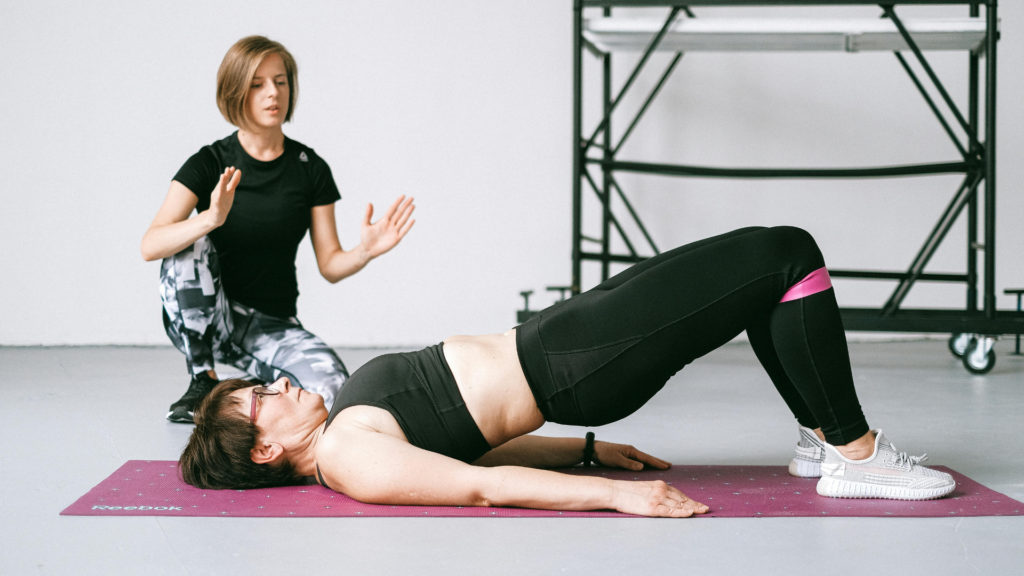
- Physiotherapy Focus: Progress to gravity-resisted exercises like modified side planks, glute bridges, and functional squats. This conditioning trains your pelvic floor to contract reflexively when you bend, lift a car seat, or carry weight.
- Mental Wellness: As you approach your final clinical clearance, process the shift in your personal identity. Actively reclaiming your physical strength serves as a foundational step in mitigating the risk of long-term postpartum depression.
Clinical Postnatal Rehab vs. Casual Exercise
| Assessment Factor | Traditional Rest & Casual Exercise | Clinical Postnatal Rehabilitation |
| Primary Objective | Caloric burn and general sweat output | Deep reconstruction of the pelvic and core canister |
| Safety Framework | High risk of accelerating pelvic organ prolapse | Strictly monitored progression mapped to tissue healing |
| Diagnostic Accuracy | Relying on self-checks or generic online videos | Digital and manual evaluation of internal muscle recruitment |
| Mental Integration | Often isolating, stressful, or overly exhausting | Integrated psychological pacing to prevent maternal burnout |
Comprehensive Care at Karthika Woman and Child Care
Navigating postpartum physical trauma shouldn’t be a solitary struggle. Located in Amrutahalli, North Bengaluru, Karthika Woman and Child Care delivers customized postnatal care engineered around your unique delivery profile.
Our facility bridges clinical obstetric expertise with specialized women’s health physiotherapy. We execute thorough physical evaluations, precise diastasis recti measurements, targeted pelvic floor biofeedback training, and direct mental health support to ensure you build a resilient, pain-free foundation for the years ahead.
Frequently Asked Questions (FAQs)
When should I start pelvic floor rehab after delivery?
You can initiate gentle diaphragmatic breathing and subtle pelvic floor engagement within the first week following an uncomplicated vaginal delivery. However, structured pelvic floor rehab after delivery involving load-bearing exercises should only begin after a thorough medical evaluation, typically around weeks three to four.
Can I still treat diastasis recti if I gave birth years ago?
Yes. Connective tissue remains capable of remodeling at any stage of life. While early intervention yields the fastest results, targeted deep-core physiotherapy can successfully close an abdominal gap and eliminate chronic back pain years, or even decades, after childbirth.
How does a clinical post pregnancy checkup differ from a standard OBGYN visit?
A standard checkup primarily confirms uterine involution (shrinking) and incision closure. A clinical, specialized post pregnancy checkup actively evaluates functional movement patterns, screens for pelvic organ prolapse, measures exact abdominal wall separation, and assesses your maternal mental health landscape.
Is leaking urine after having a baby a permanent condition?
No. While stress incontinence is a common consequence of the extreme mechanical stretch placed on your bladder support system, it is highly treatable. Customized pelvic floor rehabilitation effectively restores proper muscle tone and coordination, completely resolving incontinence for the vast majority of women.